integrating parametric systems with scalable vernacular construction typologies
arraia cabin
type: digital vernacular architecture
role: architectural designer
collaboration: Atelier Marko Brajovic
location: Alter do Chao, Para, Brazil
year: 2025
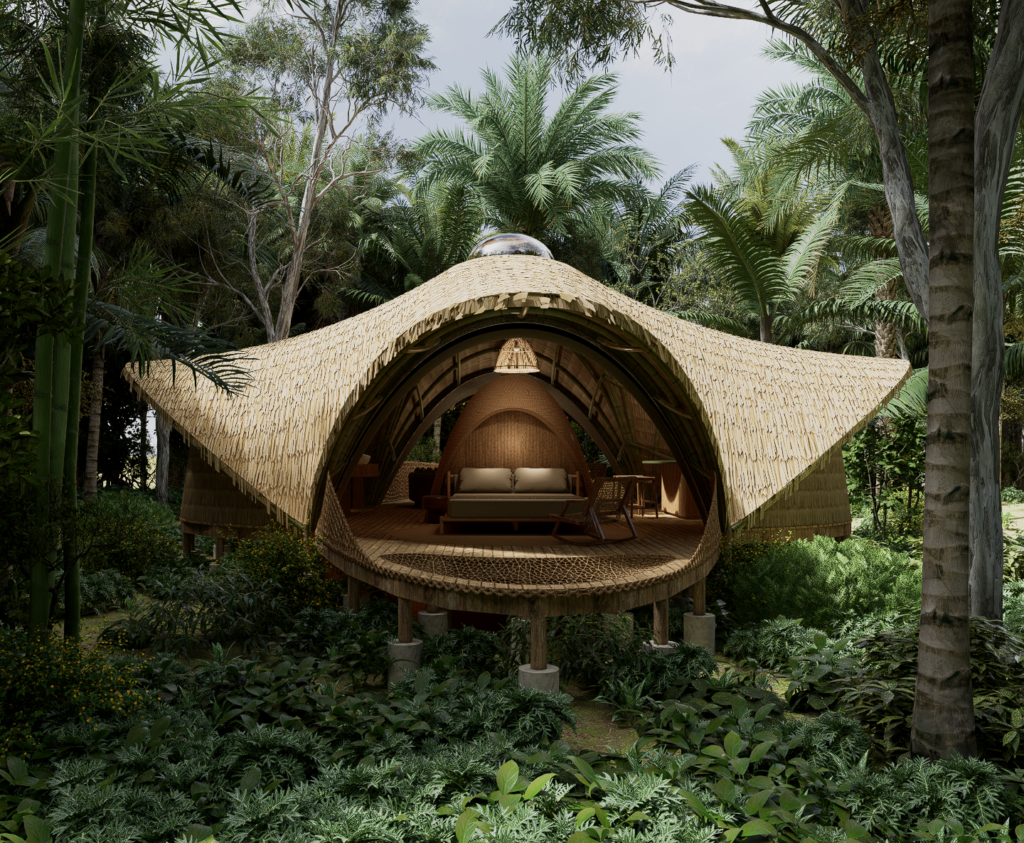
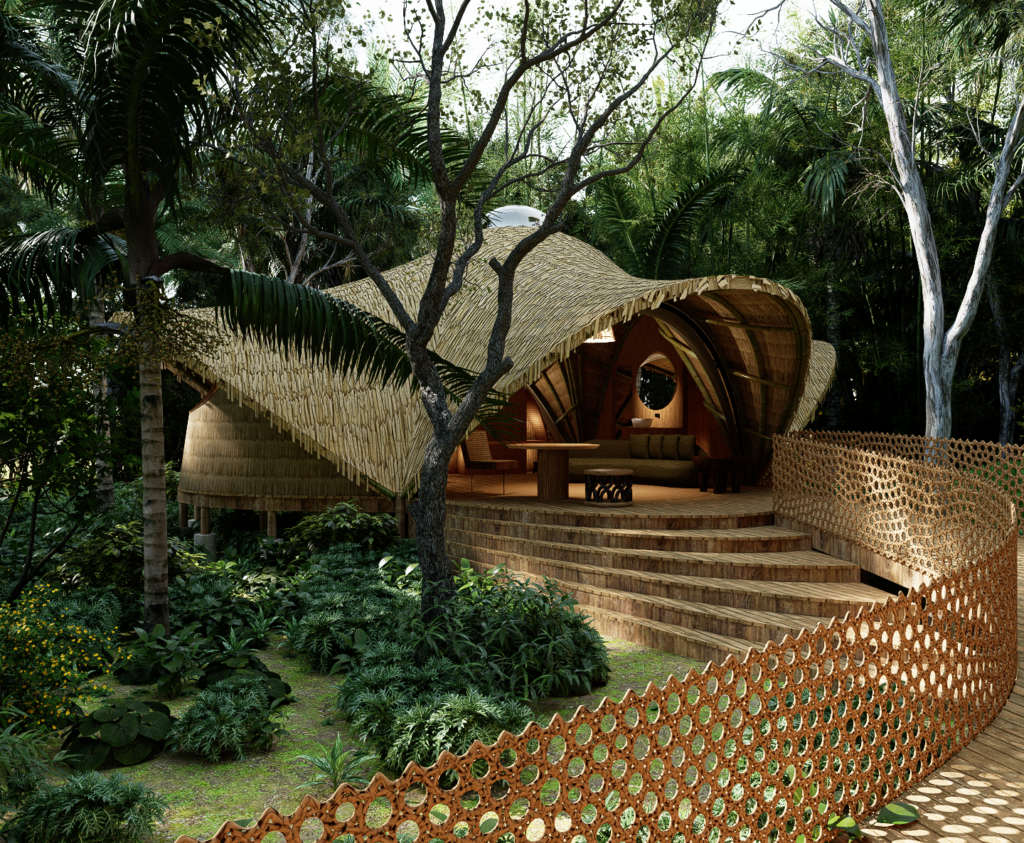
The arraia cabin was developed in collaboration with Marko Brajovic following the Architectural Association Visiting School Amazon: Inhabiting the Anthropocene 2024 workshop, where I participated as a tutor assistant. It proposes an 78 sqm housing cabin to be built in Alter do Chão, expanding on the design and construction processes explored during the workshop.
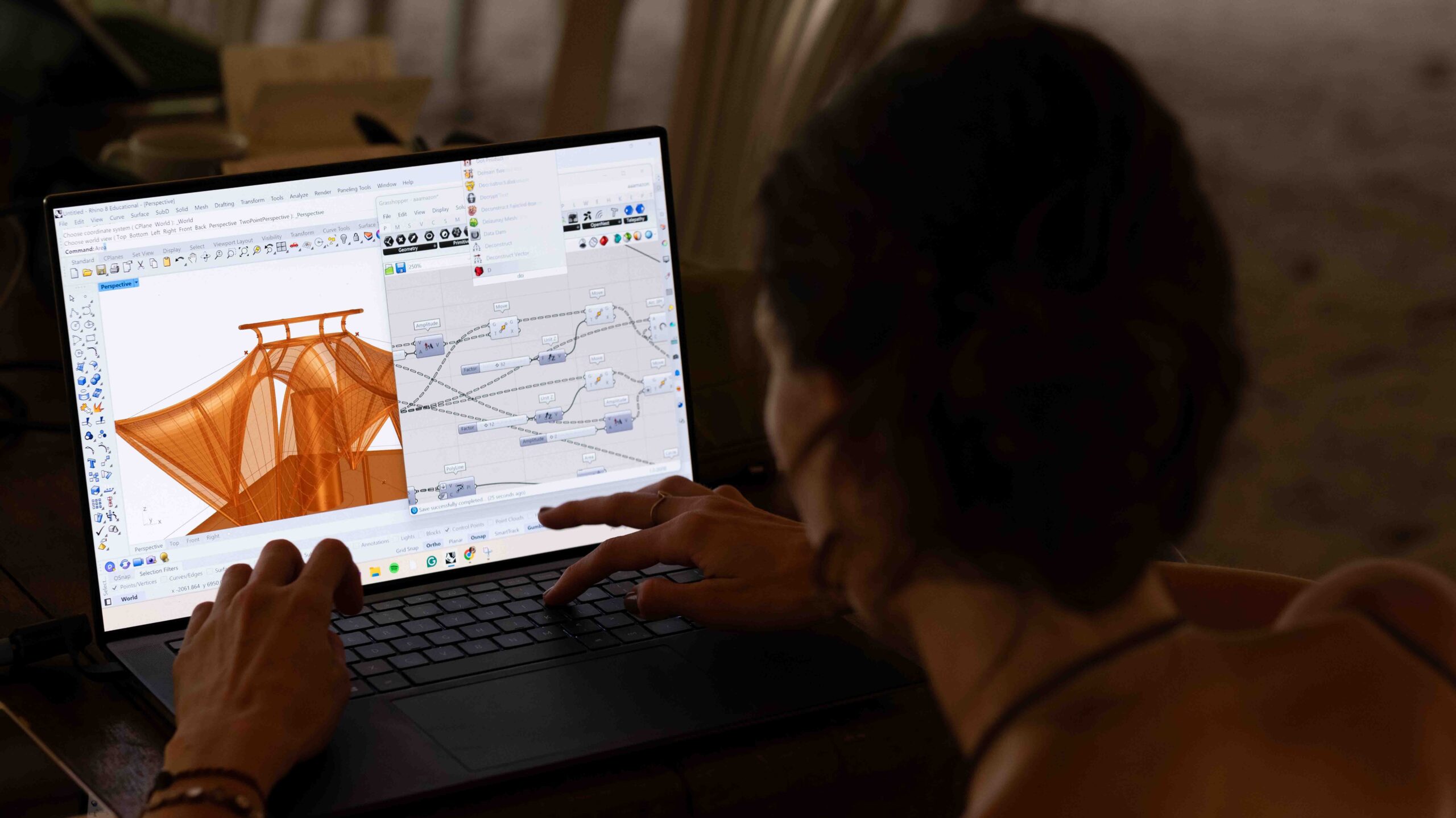
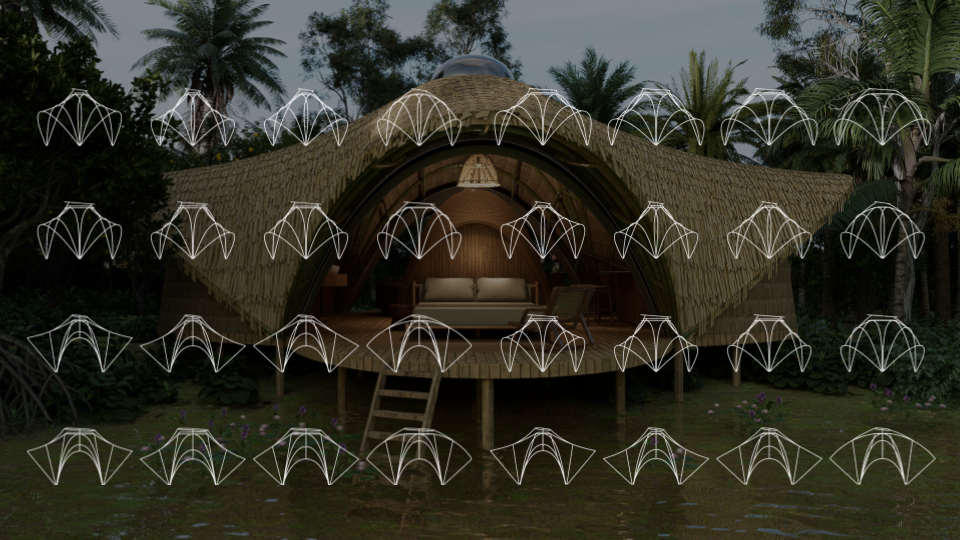
My role focused on advancing the parametric design developed in Grasshopper, refining the project’s scale and dimensions to meet the requirements of a realistic dwelling. This included adjusting parameters such as structural spans, roof inclination, and the number of arches and rafters, adapting the system to a new site while maintaining its original constructive logic. Variations in size and palm species ensure flexibility and responsiveness to local conditions.
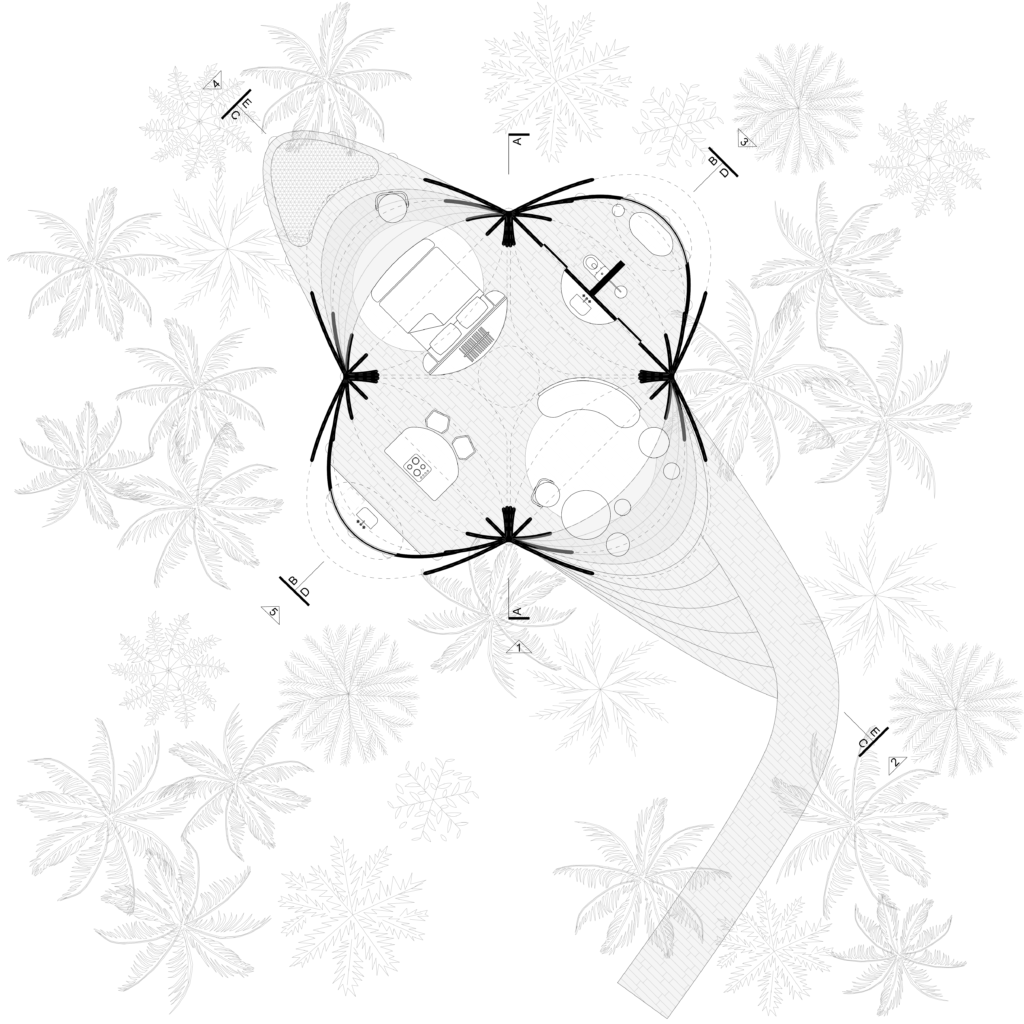
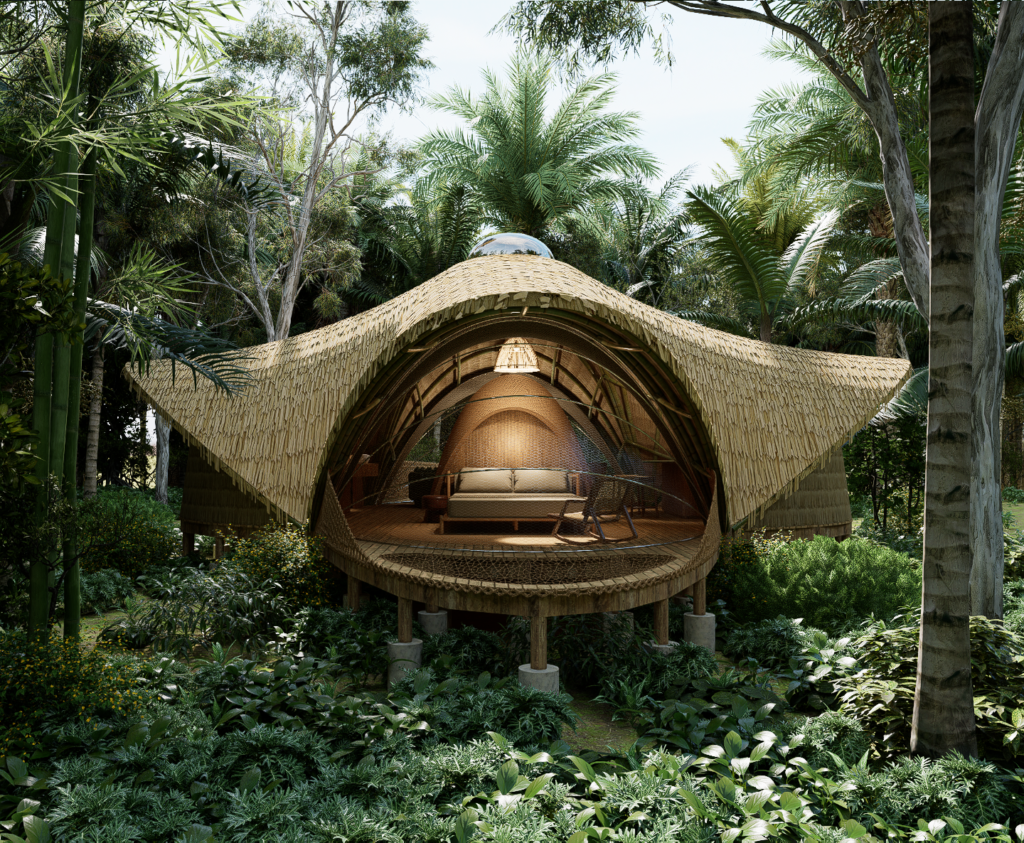
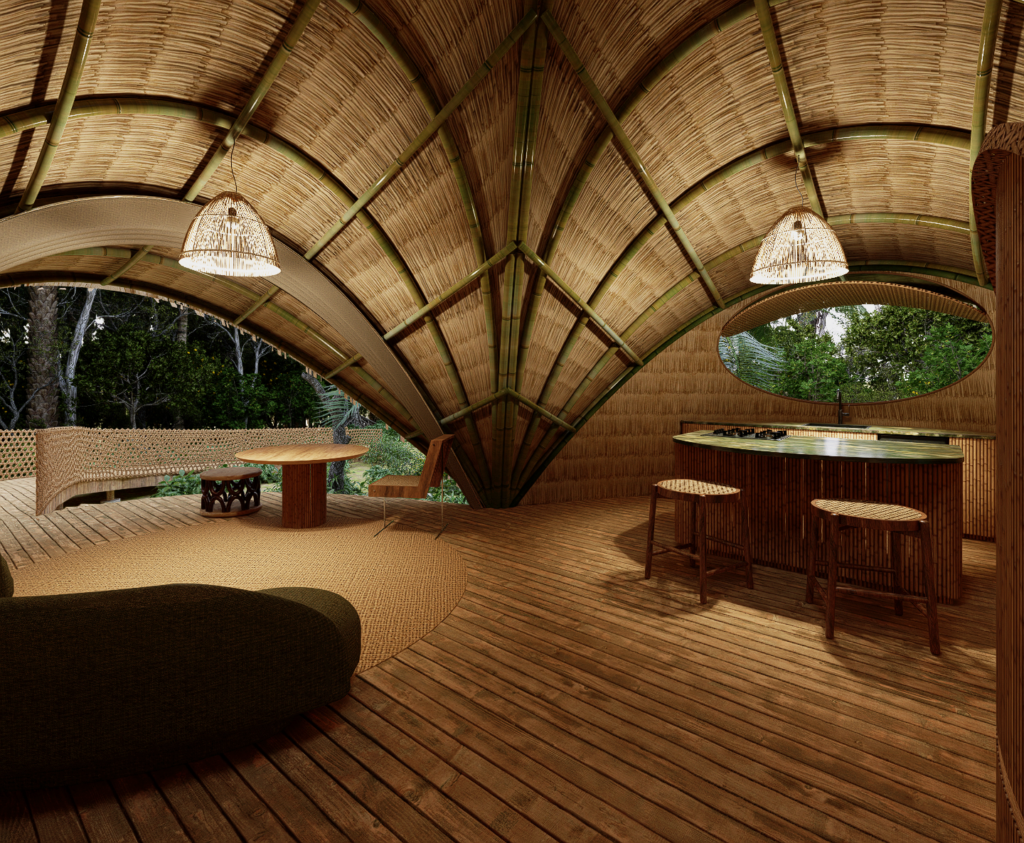
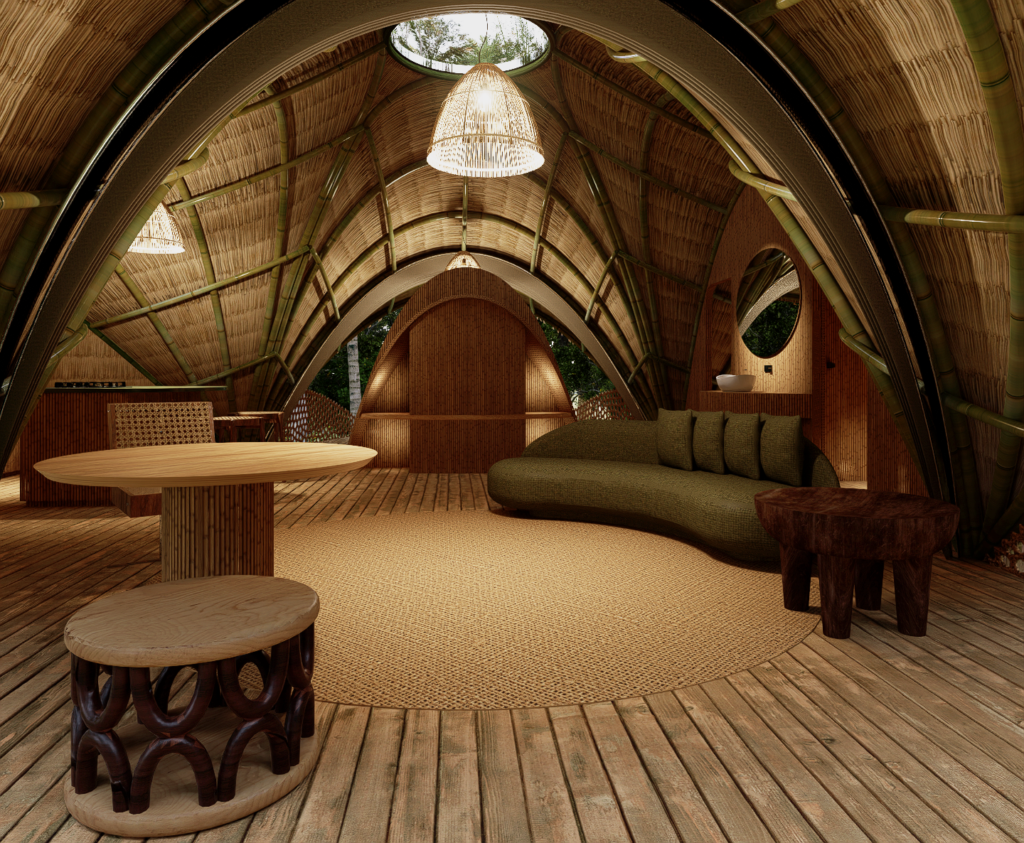
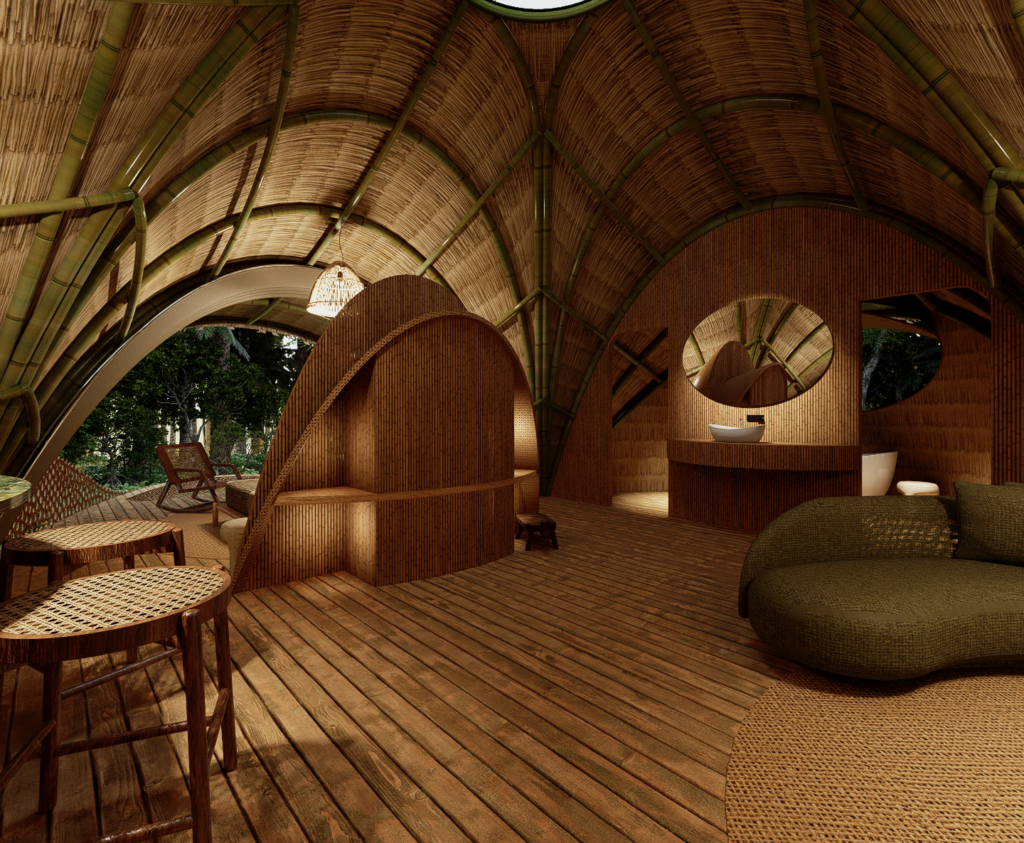
The cabin is organised around a central void that structures four main spaces: living and entrance area, bedroom, kitchen, and bathroom, allowing for fluid circulation and multiple layout configurations. The square plan, supported by only four corner points, reinforces spatial openness and adaptability. Its modular arched structure enables height and angle adjustments, while the enclosure combines fibre-based framing with woven palm infill and horizontal pivoting windows, integrating vernacular techniques with computational design.
design process
construction process
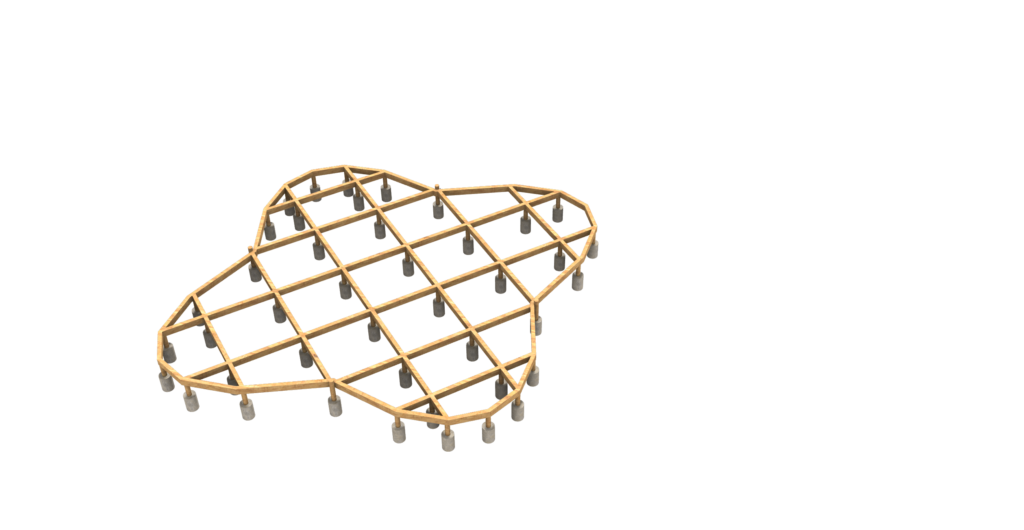
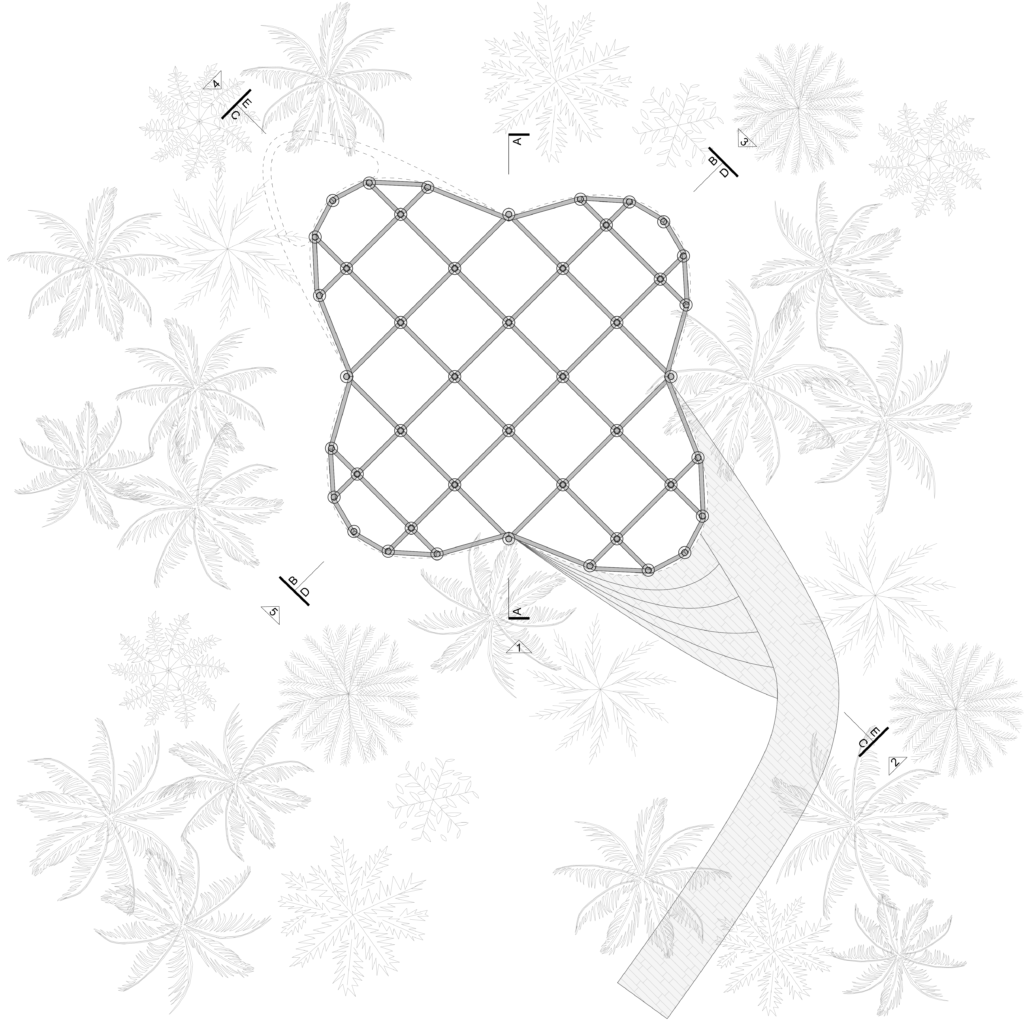
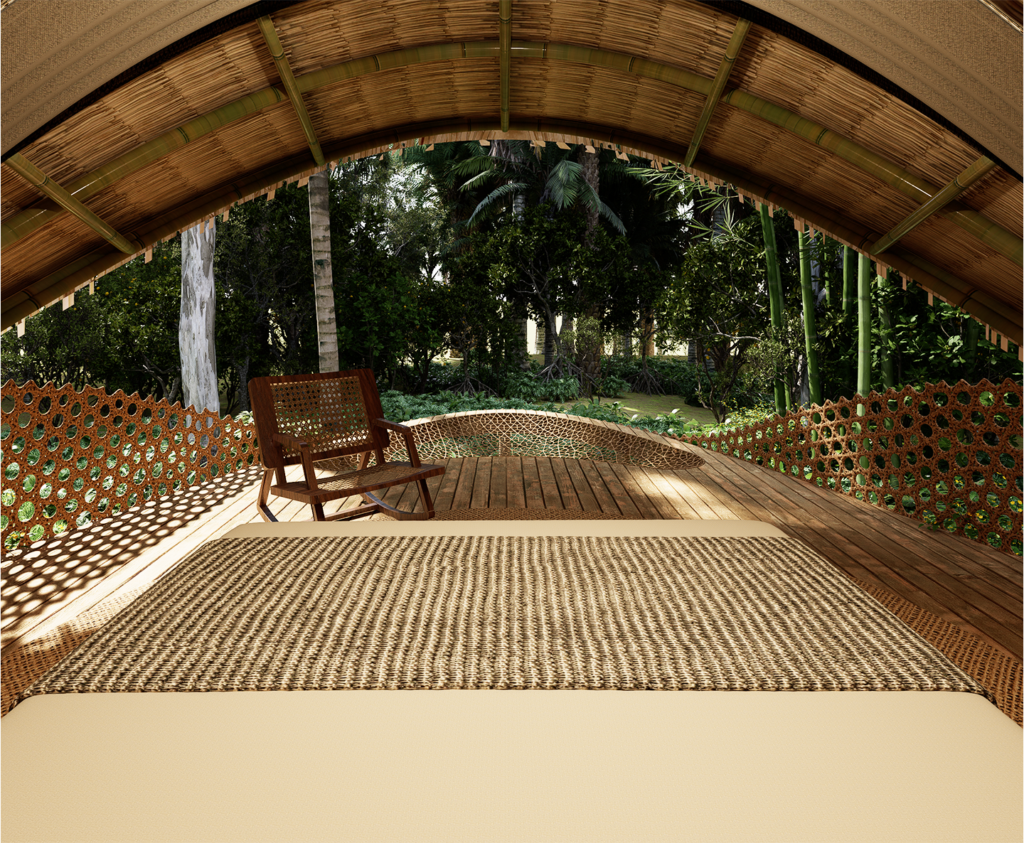
The structure consists of Pau-Ferro pillars, beams, and a wooden deck, with curved corner finishes, in which the boards are arranged perpendicular to the beams.
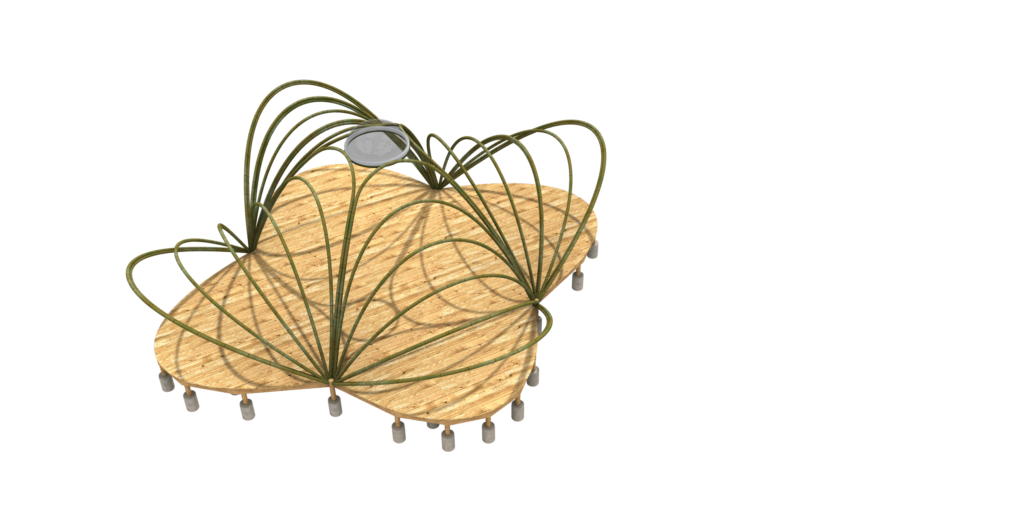
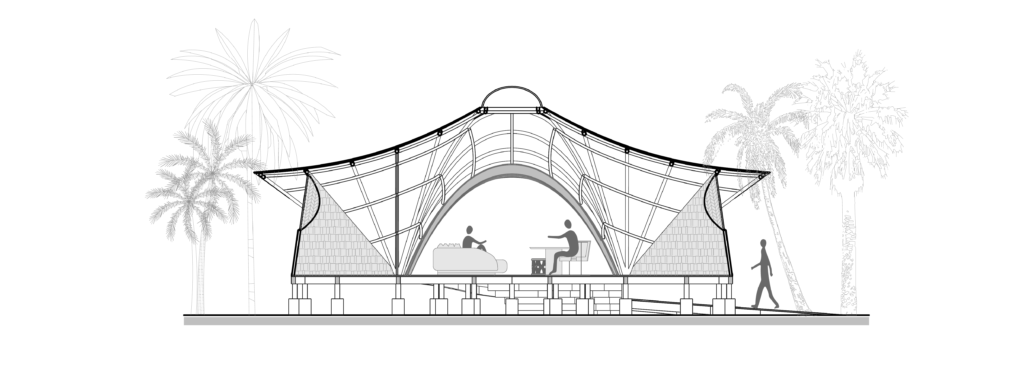
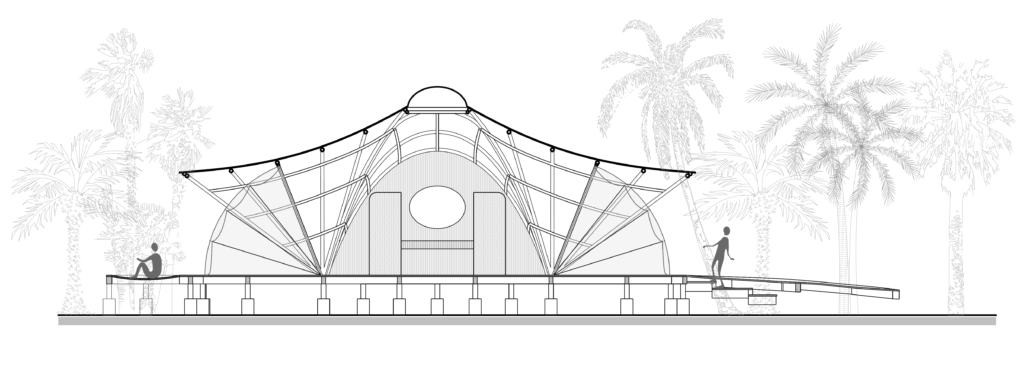
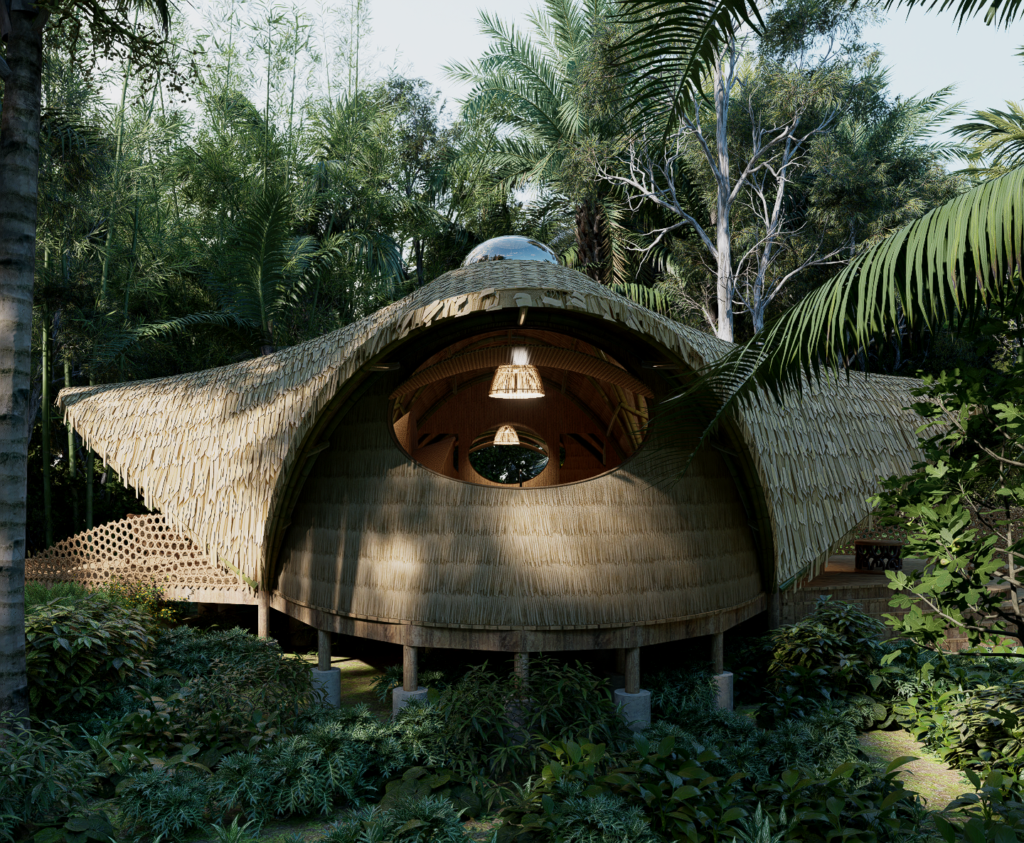
The prefabricated arches are fixed to a central metal ring, which supports a glass hemisphere measuring 1.50 m in diameter.
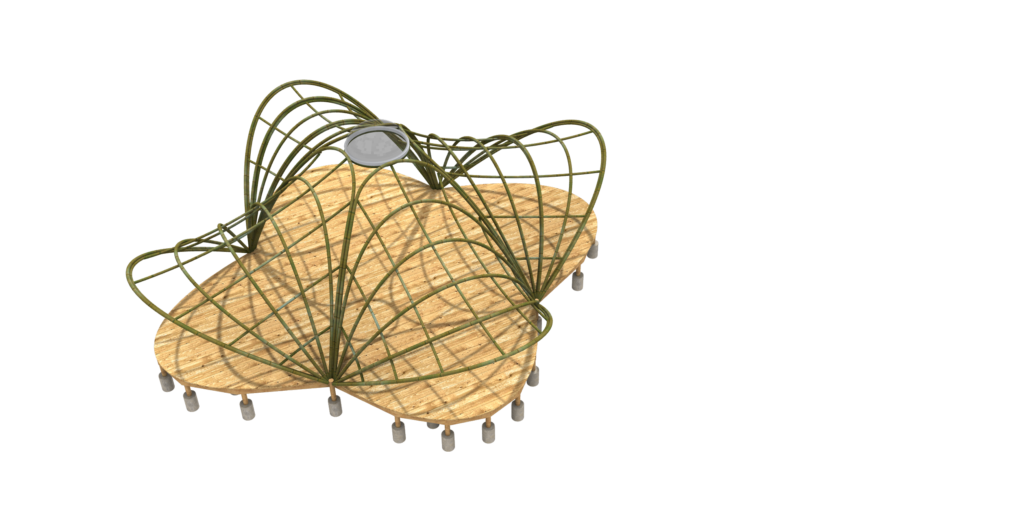
The rafters connect the arches, providing greater structural stability and facilitating the installation of the thatched roof.
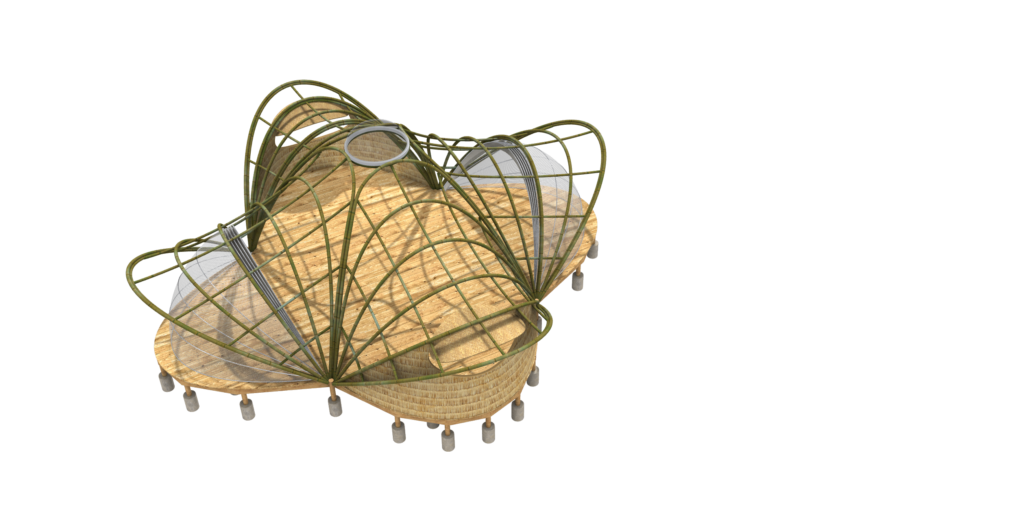
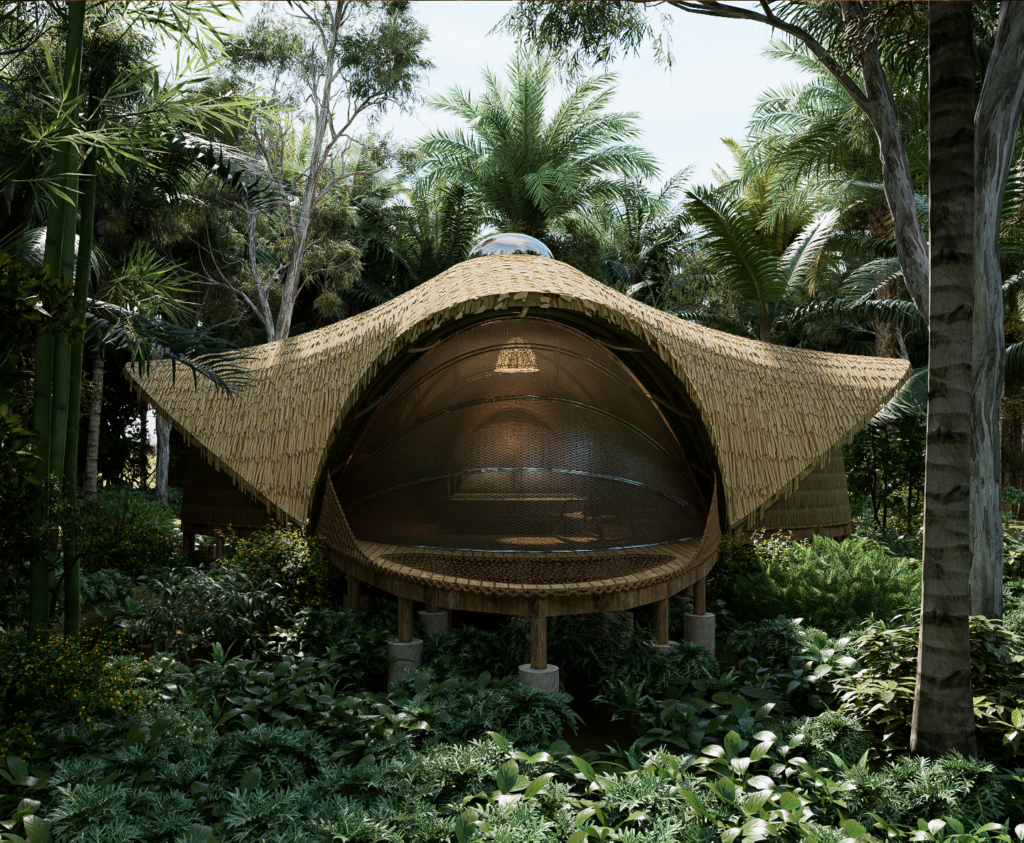
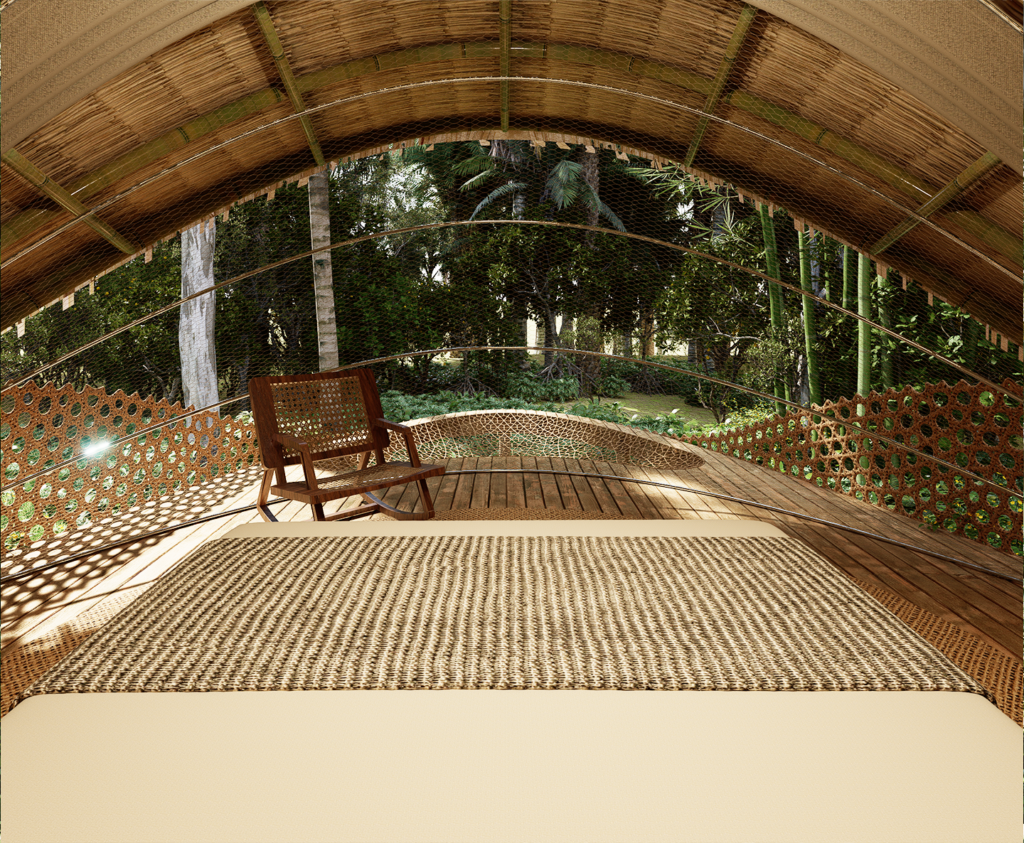
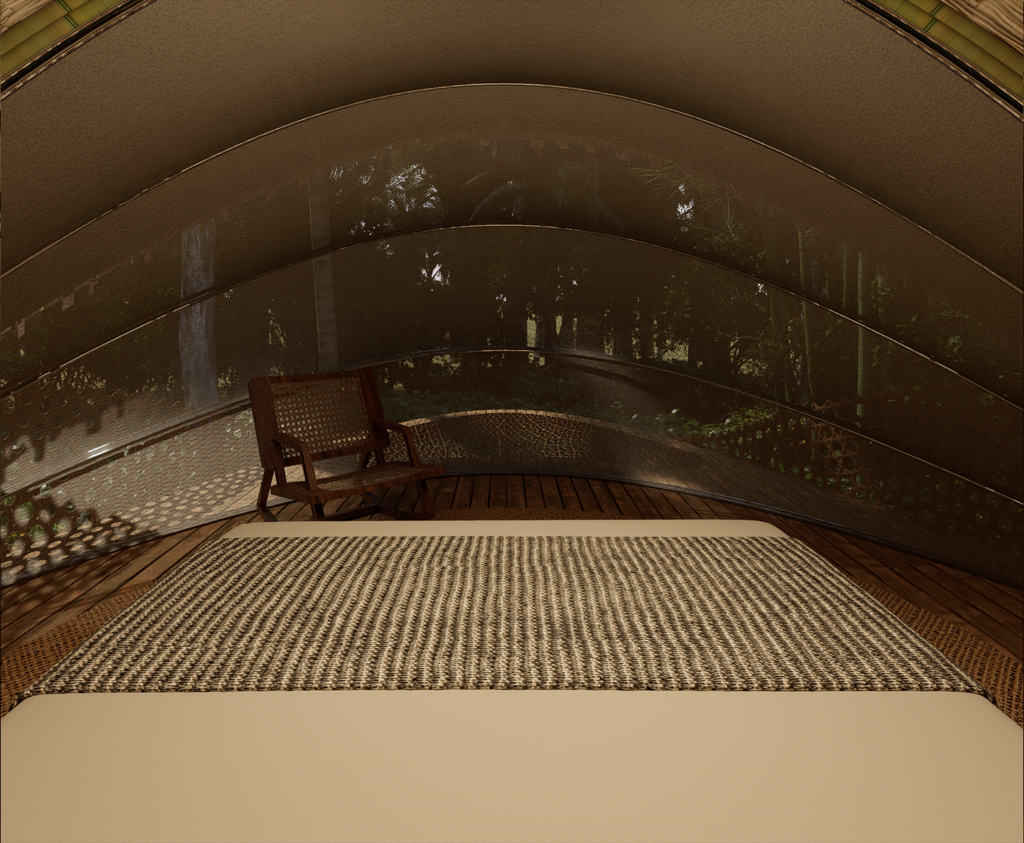
The kitchen and bathroom are enclosed with walls and windows made of woven thatch, while the entrance and bedroom have retractable closures made of mosquito netting and fabric.
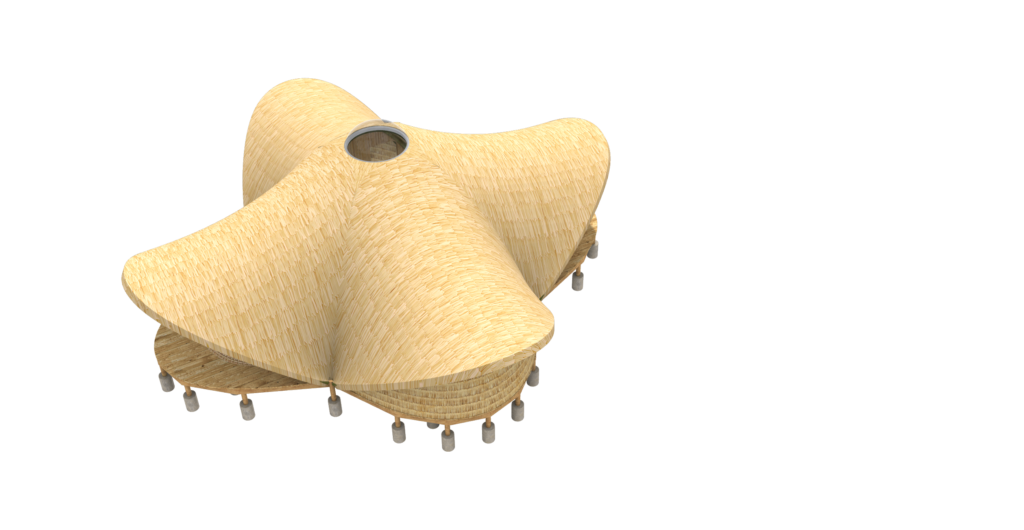
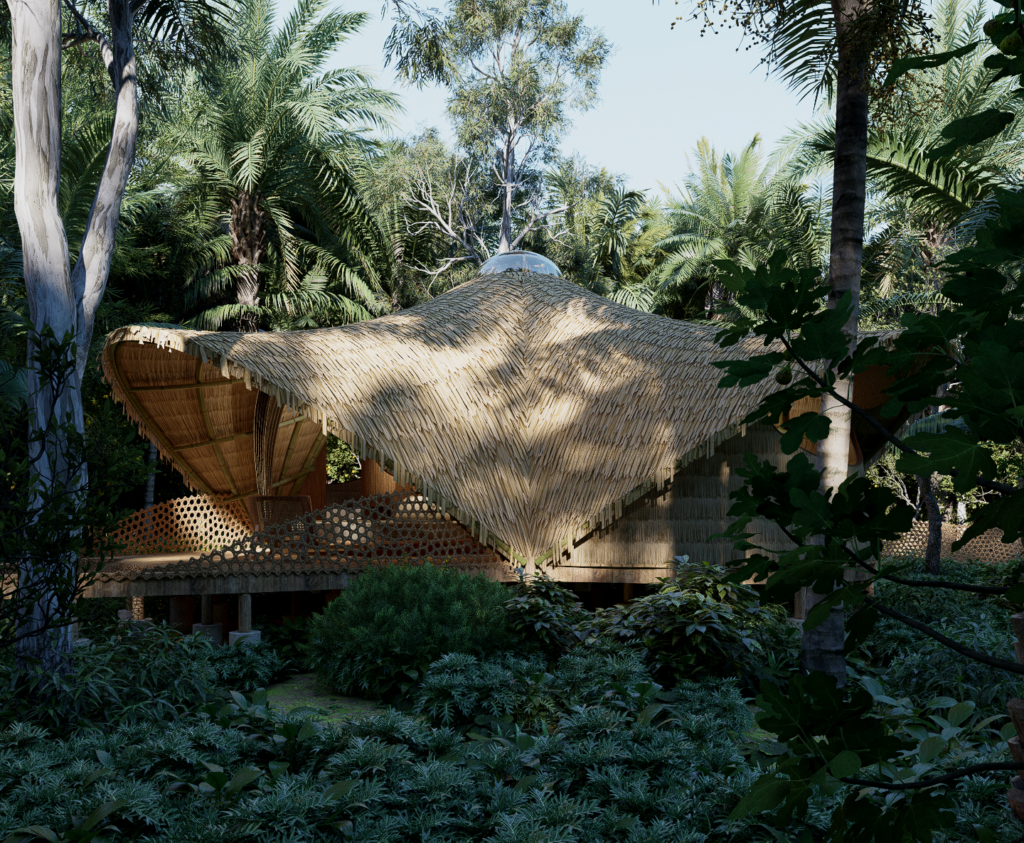
The thatch covering is installed at 20 cm intervals on both the walls and the roof.
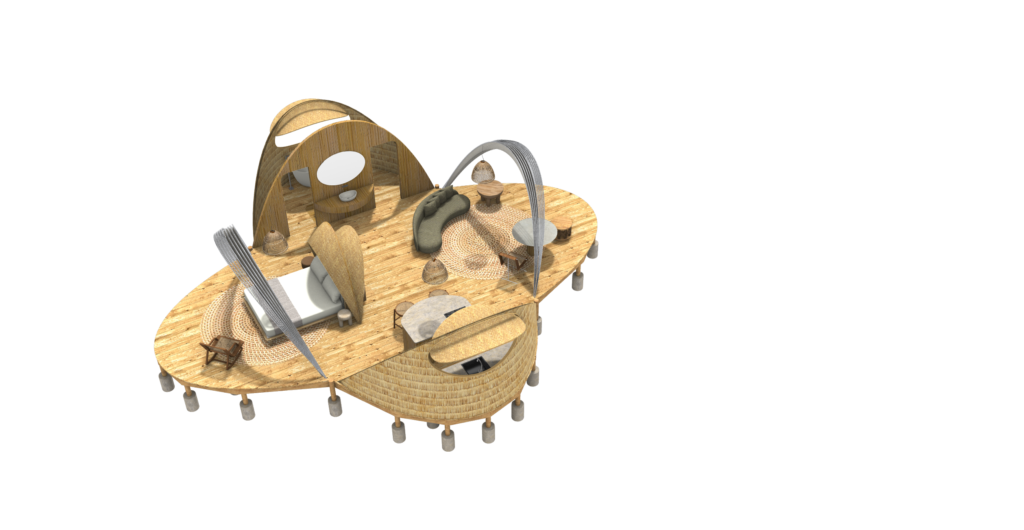
The internal walls and furniture are made from different types of woven thatch, with a variable layout.
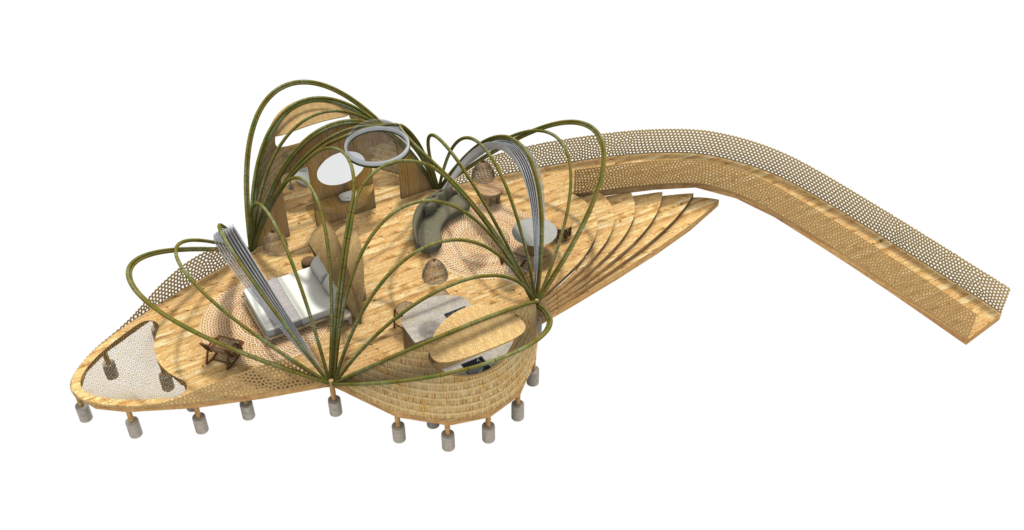
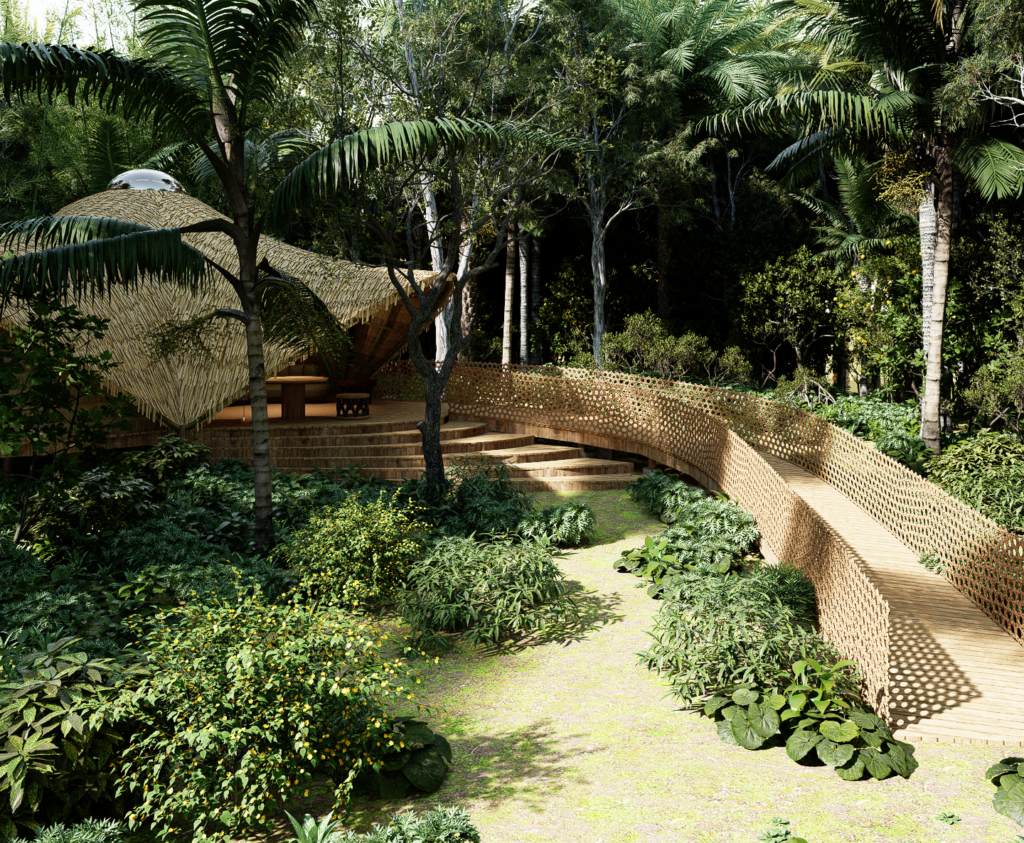
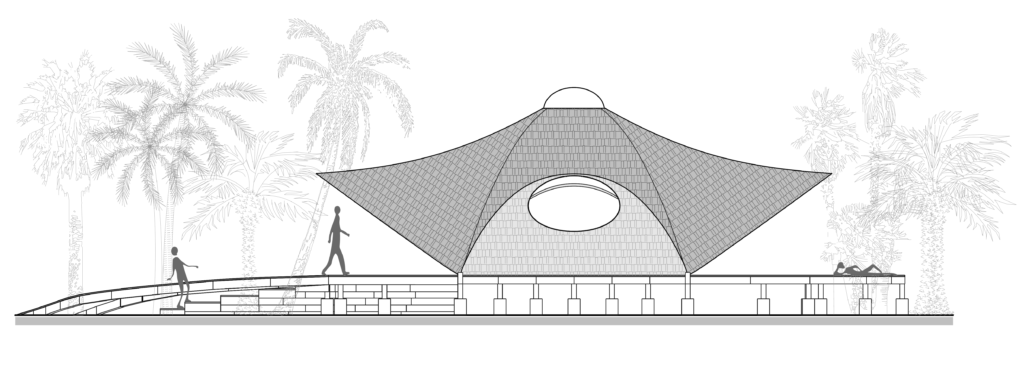
The entrance features a winding ramp with a natural-fibre guardrail, as well as a staircase that allows for sitting and enjoying the landscape. The terrace features a woven net floor that functions like a hammock.
plans
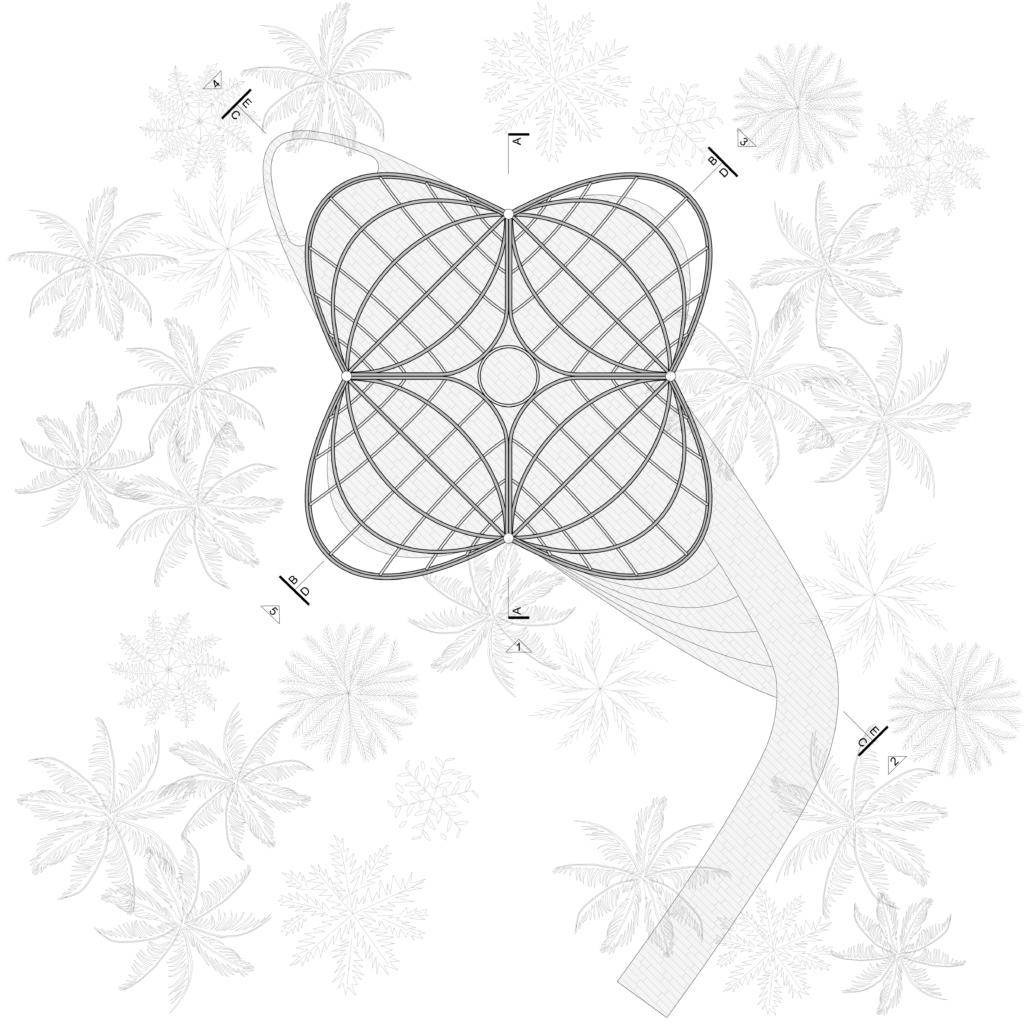
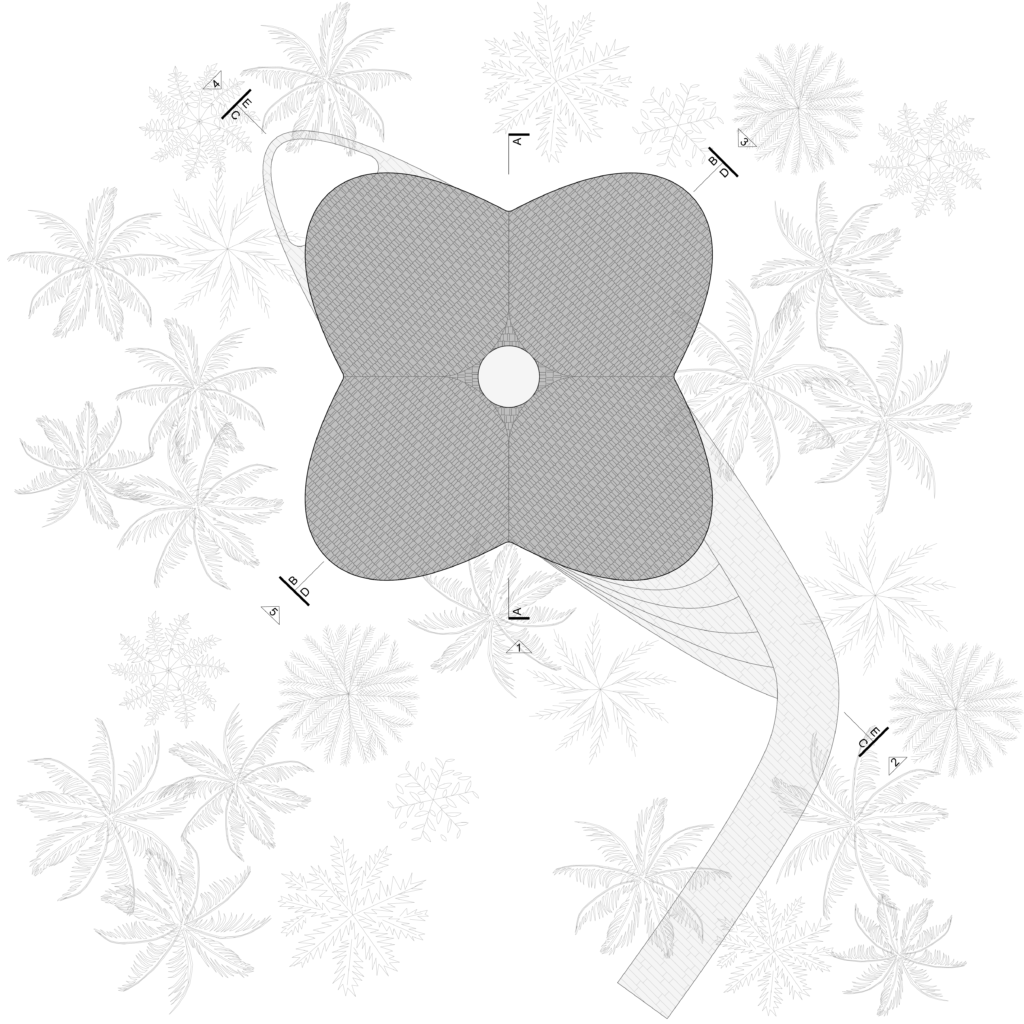
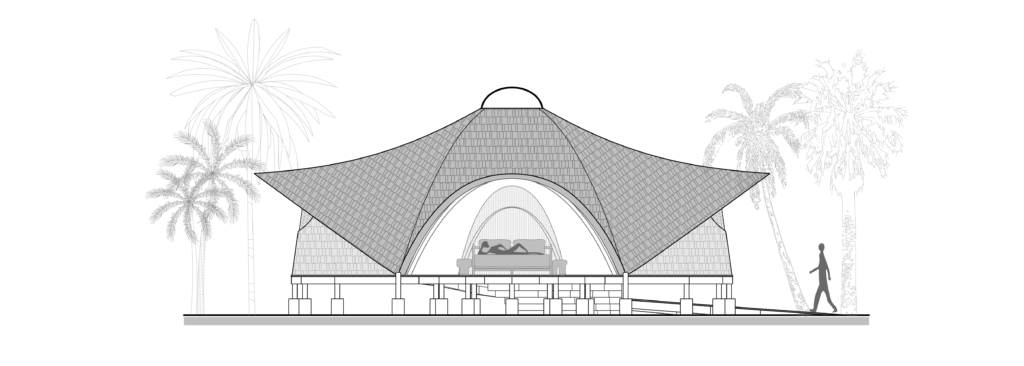
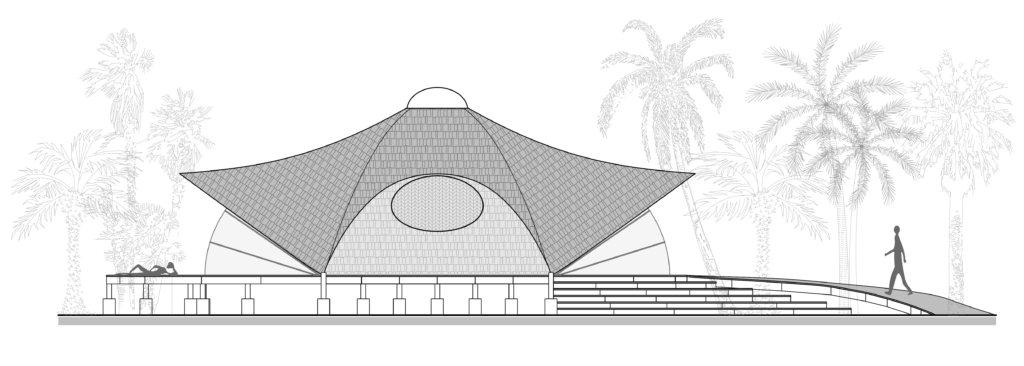
views and sections
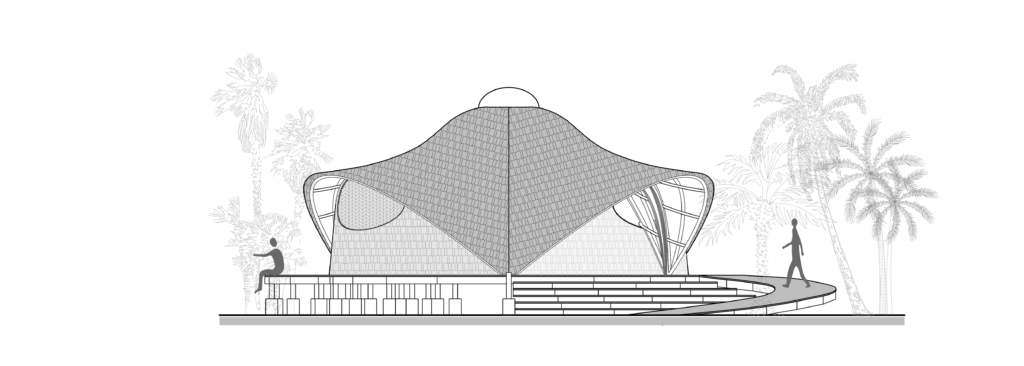
showing the side of the project
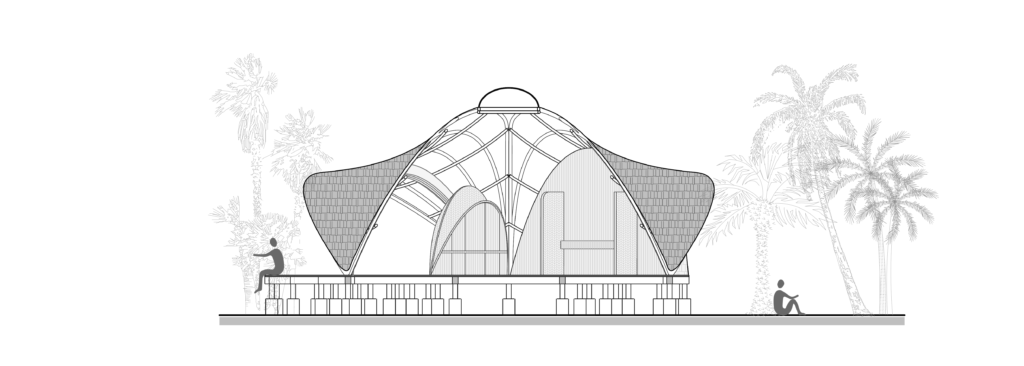
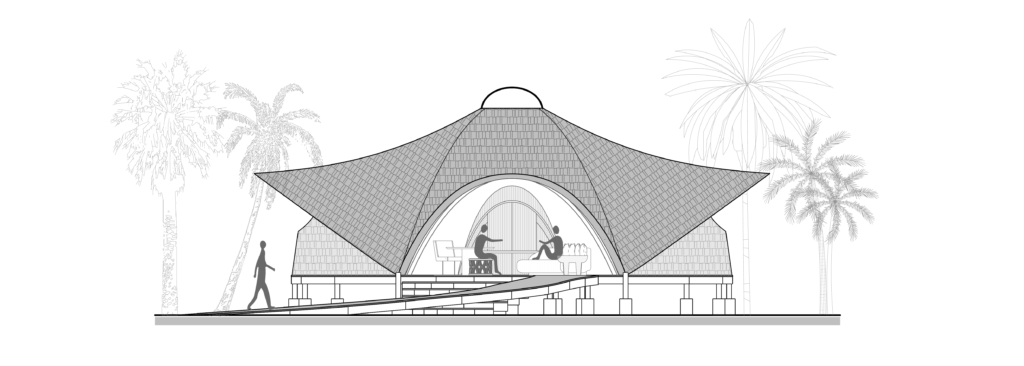
showing the kitchen and bathroom walls: rigid enclosure with fibre structure and woven straw
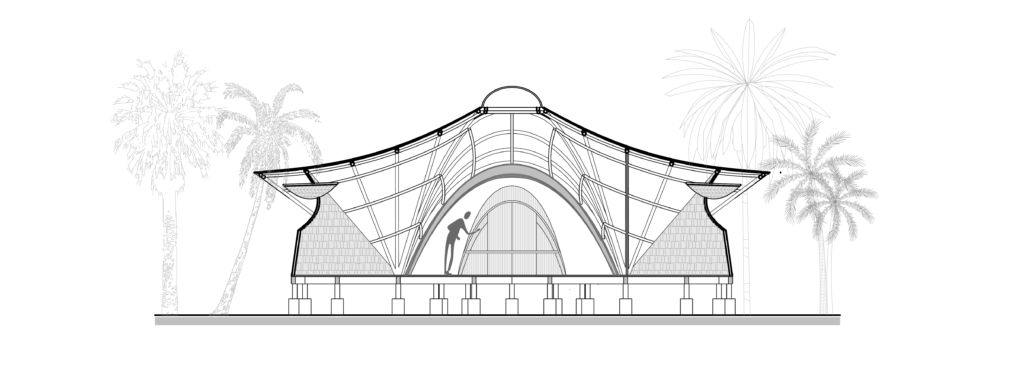
horizontal pivot windows (open)
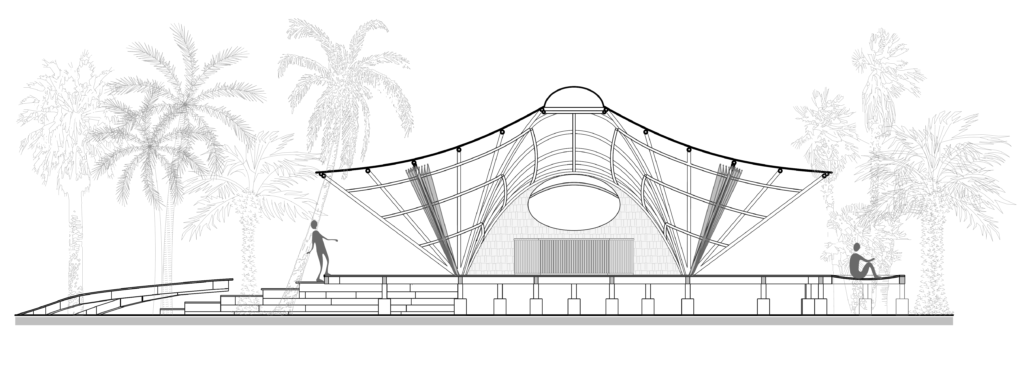
two retractable pantographic enclosure elements, one with fabric and the other with mosquito netting (open).
showing the kitchen and bathroom walls: rigid enclosure with fibre structure and woven straw.
two retractable pantographic enclosure elements, one with fabric and the other with mosquito netting (closed).
horizontal pivot windows (closed)
internal bathroom wall.
renders
team
Architect Coordinator: Marko Brajovic
Architect and Parametric Modelling: Camila Calegari Marques